
Mumbai is India’s most competitive franchise market — and its most rewarding. The city has the country’s highest concentration of premium retail locations, its most financially sophisticated investors, and a consumer base that is aspirational, fast-paced and brand-aware. For a brand with a proven model elsewhere, Mumbai is often the single biggest growth unlock available.
But Mumbai punishes brands that treat it like any other city. Rents run high, investors ask sharper questions, and one wrong micro-market decision can sink an otherwise strong brand’s local reputation for years. Expanding here isn’t about finding an available shop — it’s a structured process. Here’s exactly how to work through it, step by step.
Step 1: Understand Mumbai’s Franchise Landscape Before You Start
Before you approach a single investor or scout a single site, get an honest read on where your brand actually fits in Mumbai.
Mumbai’s franchise investor is typically different from investors in smaller cities. They usually:
- Have prior business experience
- Have access to capital without needing external financing
- Hold clear expectations around territory size, franchisor support and ROI timelines
- Evaluate your opportunity the way they’d evaluate any financial investment — with rigour, often after comparing you against two or three other brands in the same category
The consumer side is equally specific. Mumbai’s buyer is aspirational and digitally engaged, and Gen Z and young professionals make up a large share of the city’s spending power. Categories that consistently perform well as a result:
- Premium F&B
- Wellness and beauty
- Education and skill development
- Organised specialty retail in high-footfall catchments
What this step actually means for you: honestly assess whether your brand’s price point, positioning and category currently match what Mumbai’s investors and consumers respond to — before you spend money finding out the hard way.
Step 2: Define Your Target Investor Profile
Don’t wait for inbound enquiries to tell you who your Mumbai investor is — define it deliberately.
A clear investor profile answers:
- What capital range are you targeting?
- Are you looking for a hands-on owner-operator or a financially-backed multi-unit investor?
- Do you want someone with existing retail experience in Mumbai, or are you comfortable training a first-time franchisee?
This matters because Mumbai attracts a wide spectrum of investor types — from first-generation entrepreneurs testing a single outlet to seasoned multi-unit operators looking to build a portfolio across the city. Going in without a defined profile means you’ll spend time qualifying the wrong leads, or worse, signing an investor who looks financially capable but isn’t operationally right for your brand.
What this step actually means for you: write down your ideal Mumbai franchisee profile in specific terms — capital, experience, involvement level — before your first conversation, not after.
Step 3: Choose Your Micro-Market, Not Just “Mumbai”
This is the step that decides more of your outcome than any other. Mumbai is not one market — it’s a collection of very different micro-markets, and treating it as a single city is the most common and costly mistake brands make.
| Micro-market type | Areas | Rent level | Footfall | Best for |
|---|---|---|---|---|
| Premium mall | Phoenix Palladium, Infiniti Mall, R City Mall | Highest | Very high, captive | Brands whose economics absorb premium rent |
| High street | Bandra, Andheri, Thane | Moderate–high, negotiable | Strong local + passing trade | Building Mumbai presence before prime mall entry |
| Suburban corridor | Borivali, Mulund, Navi Mumbai | Lowest, most negotiable | Steady, convenience-led | Entry point with lower rental pressure |
Premium mall locations — Phoenix Palladium, Infiniti Mall, and R City Mall command some of the highest rents in the city, but they deliver the strongest footfall and brand visibility. These work when your unit economics can genuinely absorb premium rent — model this carefully before committing, not after signing.
High street corridors — Bandra, Andheri and Thane offer a more accessible entry point to build Mumbai presence, often before a brand is ready to move into prime mall real estate. These corridors combine strong local footfall with more negotiable lease terms than flagship malls.
Suburban corridors — Borivali, Mulund and Navi Mumbai offer strong consumer demand with meaningfully lower rental pressure than South Mumbai or Bandra, making them a smart entry point for brands that want Mumbai presence without premium-market rent exposure.
What this step actually means for you: shortlist 2–3 specific micro-markets that match your brand’s positioning and budget — don’t let a single “great” location pull you into a rent structure your unit economics can’t support elsewhere in the city.
Step 4: Recalibrate Your Unit Economics for Mumbai
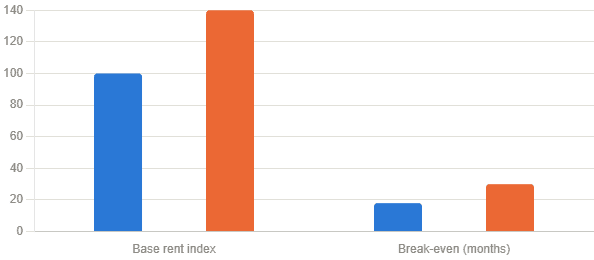
Whatever financial model built your brand’s success in a Tier 2 city or a smaller metro will not directly transfer to Mumbai. Rental costs in Mumbai typically run 30–50% higher than Tier 2 markets, and that differential alone can push your break-even timeline out significantly — a model that breaks even in 18 months elsewhere may take 30 months in Mumbai on the same revenue.
Staff costs and attrition also run higher in Mumbai than in most other Indian cities, and this needs to be reflected honestly in your franchisee-facing projections. Investors here have typically seen multiple franchise pitches before yours, and they will stress-test your numbers against their own knowledge of the market. Overly optimistic projections that don’t survive scrutiny will cost you investor trust faster than a conservative, honest model will.
What this step actually means for you: rebuild your P&L specifically for your target Mumbai micro-market — rent, staffing, and realistic revenue ramp — rather than presenting the same numbers you use in other cities.
Step 5: Build a Complete Investor Package
Mumbai investors rarely commit on a first conversation, and they rarely give second chances to brands that show up underprepared. Before you approach a single serious investor, have ready:
- Unit economics model, specific to their target location
- SOP documentation
- A clear franchise agreement
- A defined territory plan
- Investor pitch materials that speak directly to what a Mumbai investor asks about — support structure, exclusivity, and exit terms
This is also the stage to define your territory clearly — specific neighbourhoods or zones, not just “Mumbai.” Vague territory definitions create conflicts between franchisees later and can quietly damage your brand’s reputation in the investor community if disputes become public knowledge.
What this step actually means for you: treat your first serious Mumbai investor conversation as a one-shot opportunity — arrive with every document ready, not promised for later.
Step 6: Qualify Investors Rigorously, Not Just by Capital
Having the money is not the same as being the right fit. A financially capable investor who lacks the operational commitment, local market knowledge, or the right micro-market access can still produce an underperforming outlet — and in Mumbai, a struggling first location creates a negative reference point that makes every subsequent investor conversation in the city harder.
Screen for operational fit as carefully as you screen for capital:
- Does this investor understand the day-to-day demands of your category?
- Do they have — or are they willing to secure — access to the micro-market you’ve identified together?
- Are their expectations about support and timelines realistic?
What this step actually means for you: slow down the qualification step even when a capital-rich investor is eager to move fast — the wrong first Mumbai franchisee is more expensive than a delayed launch.
Step 7: Launch With Digital Visibility Built In
Mumbai consumers research brands online before visiting — this is true across categories, but especially pronounced among the Gen Z and young professional segments driving much of the city’s franchise-relevant spending. A new outlet that launches without a strong local search presence, an optimised Google Business Profile, and active social visibility will underperform its potential regardless of how good the location or product is.
Build this into your launch plan from day one, not as an afterthought once footfall disappoints:
- Local SEO for the specific neighbourhood, not just “Mumbai”
- An optimised Google Business Profile, live before opening
- Location-specific social content
- Active review management from day one
What this step actually means for you: treat digital visibility as part of the store launch checklist, with the same seriousness as fit-out and staffing.
Step 8: Maintain Consistency as You Scale Within the City
Once your first Mumbai outlet is running and validated, expansion to a second or third location should follow the same rigour — not faster, looser decision-making because “we already know Mumbai now.” Each micro-market within the city has its own dynamics, and a strong Bandra performance doesn’t guarantee the same result in Mulund.
Operational consistency across outlets matters more in a competitive market like Mumbai, where consumers have immediate alternatives if any single location underperforms on experience.
What this step actually means for you: re-run steps 3 and 4 for every new Mumbai location — don’t let early success shortcut the process for outlet two, three, or four.
Frequently Asked Questions
How much does it cost to expand a franchise in Mumbai?
Costs vary significantly by category and micro-market. A premium mall location in Mumbai commands substantially higher investment than a high street or suburban corridor site for the same brand. Rental costs alone typically run 30–50% higher than Tier 2 cities, so your total setup investment should be modelled specifically for your target location rather than assumed from a national average.
Which part of Mumbai is best for a new franchise outlet?
It depends on your category and budget. Premium malls like Phoenix Palladium or Infiniti Mall suit brands whose unit economics can absorb high rent for strong footfall and visibility. High street corridors like Bandra and Andheri offer a more accessible entry point. Suburban areas like Borivali and Mulund offer strong demand with lower rental pressure — often the smarter entry point for a first Mumbai outlet.
What kind of franchise investor should I expect in Mumbai?
Typically an investor with prior business experience, independent access to capital, and specific expectations around territory exclusivity, franchisor support and ROI timelines. They usually evaluate your brand alongside other franchise opportunities, so a complete and credible investor package matters more here than in smaller markets.
How long does it take to break even on a Mumbai franchise outlet?
It depends heavily on category and location, but expect a longer runway than in smaller cities — a model breaking even in 18 months elsewhere may take closer to 30 months in Mumbai at the same revenue, primarily due to the rental differential. Building this into investor expectations honestly, from the first conversation, avoids disputes later.
Should I open in a mall or a high street location in Mumbai?
Neither is universally better — it depends on your brand. Malls offer higher captive footfall and visibility at a higher cost with less operational control (mall timings, rules, revenue-share terms). High streets offer more control and often better rent-to-revenue ratios, but rely more on organic and local footfall. Match the format to your brand’s customer, not the other way round.
How Corporate Culture Can Help You Expand in Mumbai
Expanding into Mumbai well requires more than ambition — it requires a structured process most brands don’t have in place before they start. Corporate Culture works with franchise brands end-to-end on exactly the steps above: defining your investor profile, evaluating and shortlisting the right Mumbai micro-market, recalibrating your unit economics for the city’s cost structure, building a complete and credible investor package, and qualifying investors who are the right operational fit — not just the first ones with capital.
We’ve supported structured franchise growth across categories — from Limelight Diamonds’ ₹20+ crore in franchise investments and 7-store rollout in 6 months using the same disciplined, evidence-based approach in every engagement.
If you’re planning to expand into Mumbai, the right starting point is understanding exactly where your brand stands today.
Speak directly with our team — book a free strategy call and we’ll walk you through exactly what your brand needs to succeed in Mumbai.