
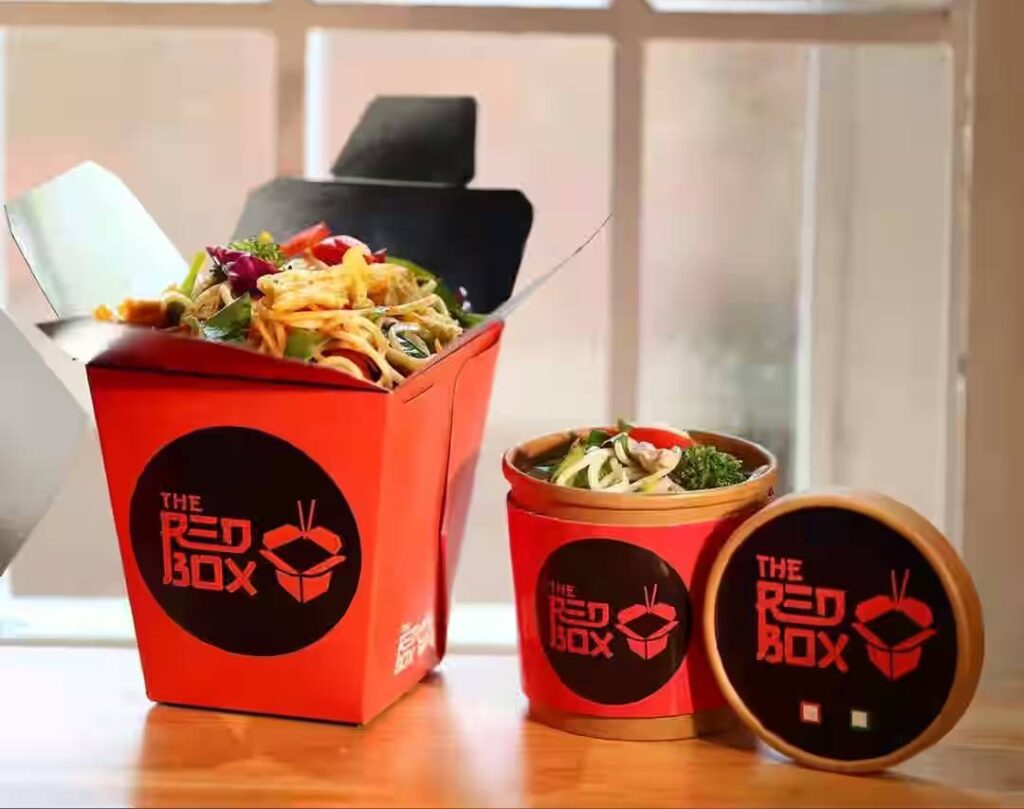
Redbox is an Indo-Chinese quick-service brand built around takeaway and delivery. If you are evaluating it as an investment, the numbers that matter are the ones below: what an outlet costs, what it returns, and what the brand provides in exchange for the royalty.
This page covers the Redbox franchise cost, outlet requirements, network performance, the support structure, and how to apply.
Redbox Franchise Cost and Investment
A Redbox outlet requires an investment of ₹30–35 lakhs for a 600–800 sq ft takeaway-format store. The brand operates on a FOFO structure — the franchise partner funds and runs the outlet, while Redbox provides the brand, systems and operational support.
| Requirement | Detail |
|---|---|
| Total investment | ₹30–35 lakhs |
| Outlet size | 600–800 sq ft |
| Format | Kitchen with takeaway counter; no dine-in requirement |
| Franchise model | FOFO — franchise owned, franchise operated |
| Staffing | 4–5 employees per store |
| Reported ROI | Approximately 2 years across the existing network |
| Menu price point | ₹150–300 per order |
Investment figures are as published by the brand. Ask for an outlet-level cost breakdown separating fit-out, equipment, deposit, franchise fee and working capital before committing — the headline figure in any franchise pitch rarely includes all five.
What the ₹30–35 lakh figure means in practice
The compact format is the reason this sits below most dine-in restaurant franchises. A 600–800 sq ft kitchen-and-counter setup carries lower rent, lower fit-out cost and a smaller team than a full-service restaurant, and the takeaway-first model removes the seating, service staff and floor area that drive costs in casual dining.
The trade-off is that revenue depends heavily on delivery aggregator performance and local footfall rather than dine-in covers. That makes site selection more consequential here than in formats with a captive seated audience.
The Market Behind the Model
India’s quick-service restaurant market is estimated at approximately USD 30 billion in 2026 — roughly ₹2.7 lakh crore — and is projected to reach around USD 47 billion by 2031, implying a compound annual growth rate near 9%.
Estimates vary considerably depending on how the category is defined. Research houses measuring only chained outlets report figures closer to USD 9–10 billion, while broader definitions including independent operators reach the USD 30 billion range. Growth projections range from 7% to 15% CAGR across sources. The direction is consistent even where the magnitude is not.
What matters more for a takeaway-format franchise is the shift in how people order. Digital ordering now accounts for around 70% of transactions at India’s leading pizza chains, and delivery aggregator volumes continue to grow at double-digit rates annually. A model built for delivery from the outset is positioned differently from a dine-in restaurant retrofitting delivery onto an existing format.
Indo-Chinese sits well within this shift. It is among the most widely consumed cuisines in India, travels well in packaging, is fast to prepare — which supports the throughput a delivery-led model requires — and holds a price point that suits repeat ordering rather than occasion dining.
Redbox Franchise ROI and Network Performance
Redbox reports an average return on investment of approximately two years across its network. Supporting operating data:
- 60 outlets — 55 franchised and 5 company-owned
- 3,500–4,500 cumulative orders per day across the network
- Presence across six states and union territories — Tamil Nadu, Andhra Pradesh, Telangana, Karnataka, Kerala and Puducherry
- 95% of outlets operate with Swiggy and Zomato, with platform terms negotiated centrally by the brand
A network of 60 outlets with several years of franchising behind it is meaningful evidence — the model has been tested across multiple markets rather than proven in a single flagship. When evaluating, ask for the performance range across outlets in cities comparable to yours, and specifically for the weakest performer. That is the number your own outlet is most likely to resemble.
Recognition and Awards
Third-party recognition is one of the few franchisor claims an investor can verify independently:
- Swiggy Restaurant Awards 2024 — ranked #1 Best in Chinese, Chennai
- Franchise India Restaurant Awards 2022 — Best Takeaway Concept of the Year
- Zomato Milestone Award — 50,000 online orders, The Red Box Chennai
The Swiggy and Zomato recognitions carry more weight than most awards in this category, because they reflect actual transaction volume and customer ratings on the platforms the business depends on rather than a paid industry listing.
What Redbox Provides, and What the Franchisee Provides
The division of responsibility is the substance of any franchise agreement. Under the Redbox FOFO structure:
| Redbox provides | The franchise partner provides |
|---|---|
| Brand licensing | Store investment |
| Store design standards and outlet setup | Rent and security deposit |
| Recruitment and initial training | Employee salaries |
| SOPs for kitchen and menu | Inventory procurement |
| Menu and recipe standardisation | Day-to-day operations |
| Customised branded packaging | Utilities and operating expenses |
| Marketing support | Royalty payments |
| Quality and kitchen audits | Maintaining quality standards and SOPs |
| Delivery platform enablement | — |
Two commitments are worth noting because they are unusual and operationally significant. Redbox states it will replace kitchen staff within 24 hours — attrition is the hidden operating cost in Indian QSR, and a brand carrying that burden materially changes the franchisee’s daily reality. And with 95% of outlets on Swiggy and Zomato under centrally negotiated terms, the network secures platform economics an independent operator would struggle to match alone.
This is a standard FOFO arrangement. If you are weighing it against structures where the brand operates the outlet on your behalf, the difference between FOCO and FOFO models explains what changes under each.
The Business Model
Redbox was founded in Chennai in 2016 and began franchising in 2018. The proposition is Indo-Chinese food built for takeaway and delivery from the outset rather than adapted to it.
The menu runs to 50+ items developed by chefs with over 33 years of Indo-Chinese experience, alongside curated combos. Packaging is purpose-designed for the format — resealable, eco-friendly and built to be eaten on the move, which is a genuine differentiator in a category where most operators use generic containers.
With 4–5 employees per outlet, the staffing model is considerably lighter than dine-in formats, which is a large part of why the reported ROI timeline is what it is.
Where Redbox Outlets Work Best
The brand targets three location types:
- Residential areas near schools, colleges and institutes — consistent demand at the format’s price point
- Shopping malls, food courts and tourist hubs — high footfall with strong takeaway behaviour
- Corporate office clusters — weekday lunch and evening delivery volume
Because the model depends on takeaway and delivery rather than seated covers, delivery radius and aggregator density matter more than street visibility. Assess a site on how many households it reaches within a 20–30 minute delivery window, not on passing traffic alone.
Is a Redbox Franchise Right for You?
The format suits an investor who wants a compact, delivery-led food business at a moderate entry point and is prepared to be involved in operations. It is a FOFO model — you run the outlet, and the brand provides the system.
It is less suited to someone seeking genuinely passive income. A 4–5 person team still requires management, and outlet performance tracks closely to how well it is run.
Before committing to any brand, work through whether the format matches your capability and market, then verify the franchisor’s numbers independently — including speaking to existing Redbox franchisees about actual revenue and breakeven rather than projected figures.
If ₹30–35 lakhs sits above your intended range, franchise options under ₹30 lakhs covers alternatives at a lower entry point. For a wider view of the category, see our Indo-Chinese franchise cost and ROI guide.
Frequently Asked Questions
What is the Redbox franchise cost in India?
A Redbox franchise requires an investment of ₹30–35 lakhs, covering a 600–800 sq ft takeaway outlet. Ask the brand for a line-by-line breakdown separating fit-out, equipment, deposit, franchise fee and working capital before committing.
How long does it take to recover the investment?
Redbox reports an average ROI of approximately two years across its network. As with any franchise, ask for the range across outlets in cities comparable to yours rather than the network average — and specifically for the slowest-performing outlet.
How many Redbox outlets are there?
The network comprises 60 outlets — 55 franchised and 5 company-owned — across Tamil Nadu, Andhra Pradesh, Telangana, Karnataka, Kerala and Puducherry, handling 3,500 to 4,500 cumulative orders per day.
What space is required for a Redbox outlet?
Between 600 and 800 sq ft, configured as a kitchen with a takeaway counter. Dine-in seating is not required, which keeps both rent and fit-out costs below full-service restaurant formats.
What support does Redbox provide to franchisees?
Outlet setup, staff recruitment and initial training, kitchen and menu SOPs, branded packaging, marketing support, ongoing quality audits, and delivery platform enablement. The brand also commits to replacing kitchen staff within 24 hours and negotiates Swiggy and Zomato terms centrally on behalf of the network.
Which franchise model does Redbox operate?
FOFO — franchise owned, franchise operated. The partner funds and runs the outlet while Redbox supplies the brand, operating systems and support. The partner is responsible for daily operations, staffing and local execution.
CONSIDERING A REDBOX OUTLET?
Talk to our franchise team
Corporate Culture works with Redbox on franchise development. We can walk you through territory availability, outlet economics and the application process — and tell you honestly whether the format fits your situation.
Or message us on WhatsApp: +91 63819 37457
Ready to Explore a Redbox Franchise Opportunity?
If you’re interested in learning more about investment requirements, outlet locations, and franchise opportunities, chat with our franchise team today.
📞 Chat with Us: 6381937457
Our team will be happy to guide you through the franchise process and answer your questions about starting a Red Box outlet.