
The cost to open a food franchise is often the first and most important question for first-time franchise buyers. For professionals aged 34–50—whether employees planning a career shift, investors exploring stable returns, or business owners seeking expansion—clarity on franchise investment is critical. Beyond the advertised numbers, food franchise costs include multiple layers that directly impact risk, profitability, and scalability. This guide breaks down those costs clearly, helping you evaluate opportunities with confidence and avoid costly surprises.
What Does It Cost to Open a Food Franchise?
Opening a food franchise is not a single-payment decision—it’s a structured investment spread across setup, branding, and operations. Many beginners assume the franchise fee represents the full cost, but in reality, it is only one part of the total financial commitment.
To make an informed decision, you need to understand the complete investment range, how costs vary by model, and what kind of capital buffer is realistically required to operate smoothly in the first year.
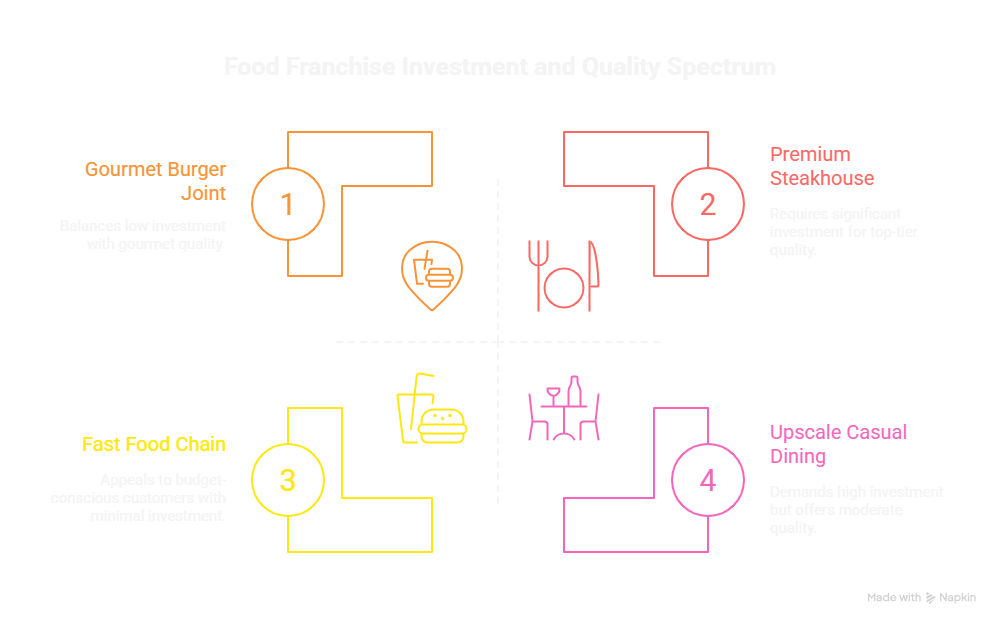
Typical Investment Range
- Low-cost food franchises: ₹20–30 lakhs
- Mid-range franchises: ₹30 lakhs–₹1 crore
- High-investment brands: ₹1 crore+
➡️ These ranges vary based on format, city, store size, and brand positioning.
Key Cost Components Explained
1. Franchise Fee
The franchise fee is the upfront cost paid to the brand for licensing, training, and access to operating systems. For first-time franchisees, this fee often creates a sense of security, as it includes brand know-how and standard operating procedures.
However, it’s important to understand that the franchise fee does not cover physical setup or operational expenses. It simply gives you the right to operate under the brand name.
- One-time payment
- Covers training, brand usage, and documentation
- Typically non-refundable
2. Location, Rent & Deposit
Location plays a decisive role in food franchise success. High-footfall areas come with higher rentals, but better visibility and sales potential. First-time investors should balance affordability with accessibility.
Rental and deposit costs can significantly influence your cash flow in the first year. Choosing a scalable location instead of a premium one often improves long-term sustainability.
- Security deposit (usually 3–6 months’ rent)
- Monthly lease rentals
- Local compliance approvals
3. Store Setup, Kitchen & Equipment
This is often the largest portion of your investment. Brands specify layout standards, equipment types, and design guidelines to ensure consistency across outlets.
For beginners, this structured setup is actually beneficial—it reduces trial-and-error and speeds up launch timelines.
- Kitchen equipment & refrigeration
- Furniture, interiors, and signage
- POS and ordering systems
4. Licenses, Legal & Pre-Opening Costs
Many first-time franchisees underestimate regulatory costs. These expenses are mandatory and vary by state and municipality.
Proper planning here avoids delays and penalties during inspections and audits.
- Food safety licenses
- Trade and municipal permits
- Legal and professional fees
5. Working Capital & Initial Inventory
No food franchise becomes profitable from day one. Working capital ensures smooth operations while sales stabilize.
This buffer protects you from early-stage cash stress and allows you to focus on execution rather than survival.
- Initial raw material inventory
- Staff salaries for first 2–3 months
- Utilities and daily expenses


Ongoing Costs You Must Budget For
After launch, a food franchise operates on a shared-revenue model. Understanding ongoing expenses is crucial for accurate ROI calculations.
These costs are typically standardized across brands and directly linked to your monthly revenue.
- Royalty fees (percentage of sales)
- Marketing or brand fund contribution
- Technology and software subscriptions
Low-Cost vs Mid-Range vs High-Investment Franchises
Choosing the right investment bracket depends on your risk appetite, involvement level, and growth expectations. Lower-cost franchises offer faster entry, while mid and high-range brands provide stronger brand pull.
For first-time investors, starting small often allows learning without overexposure.
Examples of Franchise Brands by Investment Range
The brands below sit at different ends of that range, and our guide to choosing the right food franchise in India sets out what each one actually costs — including the working capital most quoted figures leave out.
₹20–30 Lakhs (Low-Cost Entry):
- Biggies Burger
- Milky Way
- Roll Box
- Red Box
₹30 Lakhs–₹1 Crore (Medium Investment):
- Junior Kuppanna
- Wang’s Kitchen
- The Chocolate Room
₹1 Crore+ (High Investment / Cloud Kitchen & Scalable Models):
- Rebel Foods
These brands offer structured support and are suitable for first-time franchisees seeking clarity and predictability.


Is a Low-Cost Food Franchise Right for First-Time Investors?
Low-cost franchises are attractive because they reduce financial risk and shorten the learning curve. They are especially suitable for professionals transitioning from employment to entrepreneurship.
However, lower investment also means limited scalability and narrower margins. Evaluating long-term goals before choosing is essential.
If that trade-off is acceptable for a first outlet, our shortlist of low-cost food franchises for first-time investors covers which entry-level brands still provide real training and supply chain support.
How to Evaluate ROI Before Investing
ROI is not just about profit margins—it’s about consistency, support, and repeatability. A franchise with moderate margins but strong systems often outperforms high-margin but unstable models.
Before investing, assess operational involvement, franchisor support, and breakeven timelines realistically.
Fees are the easiest part of that to compare directly — we put what brands charge against what they return in which food franchise brands offer the best ROI.
Conclusion
Understanding the cost to open a food franchise empowers first-time investors to make confident, data-driven decisions. From franchise fees and setup expenses to working capital and ongoing costs, clarity at every stage reduces risk and improves outcomes. For professionals and investors seeking a structured entry into entrepreneurship, evaluating food franchise costs carefully is the first step toward building a sustainable and scalable business.