
Introduction
Choosing the right food franchise in India is one of the most important decisions for any aspiring entrepreneur. While the food and beverage sector continues to grow rapidly—driven by rising disposable incomes, urbanization, and the expansion of platforms like Swiggy and Zomato—not every franchise opportunity delivers consistent returns.
Many first-time investors make decisions based on brand popularity alone, without evaluating critical factors like investment requirements, ROI, location fit, and operational complexity. This often leads to delayed break-even or even business failure.
This guide provides a step-by-step framework to choose the best food franchise in India, helping you minimize risk and maximize long-term profitability.
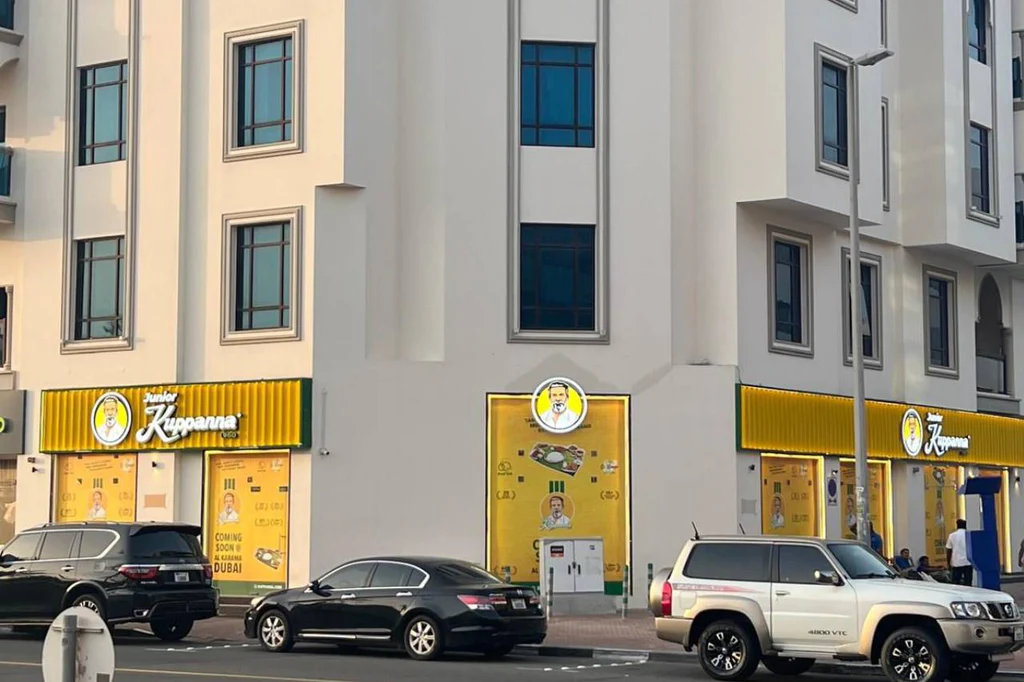
Food Franchise Brands in India by Investment
Before the framework, the options. These are brands we place investors into directly, so the figures are the ones we actually work with rather than indicative ranges — and we can confirm which territories are still open.
| Brand | Format | Investment | Space | Network |
|---|---|---|---|---|
| Rolls Mania | Rolls & wraps QSR | ₹17–22 lakhs | 250 sq.ft | 120 outlets |
| Milky Way | Ice cream & desserts | ₹20 lakhs | 500 sq.ft | — |
| Biggies Burger | Burger QSR | ₹20–40 lakhs | 800 sq.ft | 150+ outlets |
| Red Box | Indo-Chinese QSR | ₹30 lakhs | 600–800 sq.ft | 60 outlets |
| Rebel Foods | Multi-brand cloud kitchen | ₹55–58 lakhs | 600 sq.ft | — |
| Wangs Kitchen | Chinese casual dining | ₹55–60 lakhs | 2,000 sq.ft | — |
| The Chocolate Room | Café & desserts | ₹60–65 lakhs | 1,200 sq.ft | 450 outlets |
| Junior Kuppanna | South Indian restaurant | ₹1 crore | 2,400 sq.ft | — |
📞 Enquire about any of these brands — WhatsApp or call +91 63819 37457
What the table shows
Space drives cost more than brand prestige does. Rolls Mania at 250 sq.ft and Junior Kuppanna at 2,400 sq.ft are separated by roughly ₹80 lakh, and most of that gap is the fit-out and rent that floor area demands — not the strength of the brand behind it.
The cloud kitchen sits oddly in the list. Rebel Foods needs ₹55–58 lakh on only 600 sq.ft, because you are paying for multi-brand kitchen capacity rather than a storefront. It is the one format where location is chosen for delivery reach instead of visibility, which changes the rent calculation entirely.
Compact QSR is where most first-time investors should look. Under ₹30 lakh, at 250–800 sq.ft, these formats open up sites that larger formats cannot afford — and in high-rent corridors a small footprint is a strategic advantage rather than just a cheaper one.
Territory availability changes. Some of these brands already have locations allocated in major cities, others are actively looking. Ask before planning around a specific area.
Why Choosing the Right Food Franchise Matters
Not all franchises succeed equally—even within the same brand. The performance of a franchise depends on multiple interconnected factors:
- Market demand in your chosen location
- Total investment and working capital
- Operational efficiency
- Brand support and systems
A poor decision at the beginning can result in:
- High fixed costs with low revenue
- Long break-even timelines
- Limited flexibility in operations
Before evaluating options, work through the complete cost structure of opening a food franchise — including the lines most quoted figures leave out.
Step 1: Define Your Investment Budget Clearly
Your budget is the foundation of your decision. It determines:
- Which franchise brands you can afford
- The type of outlet (kiosk, cloud kitchen, dine-in)
- Your risk exposure
Investment Categories
- Low Investment (₹15–25 lakhs)
Suitable for kiosks and small QSR formats on 250–500 sq.ft - Mid Investment (₹25–75 lakhs)
Standard QSR outlets and small dine-in setups - High Investment (₹75 lakhs–₹1.5+ crore)
Premium casual dining or flagship outlets
For beginners, starting lower reduces risk and allows faster learning — see our shortlist of low-cost food franchises for first-time investors.
Smaller cities often deliver better returns on less capital — we cover the low-investment food franchise opportunities in small cities separately.
Step 2: Evaluate ROI (Return on Investment) Before Brand Name
One of the biggest mistakes investors make is choosing a franchise based only on brand recognition. A well-known brand does not guarantee profitability.
Key ROI Metrics to Analyze
- Break-even period (typically 18–36 months)
- Expected monthly revenue
- Net profit margins (15%–25% for most formats)
- Royalty and marketing fees
Why ROI Matters More Than Brand
A smaller, well-positioned franchise can outperform a big brand if:
- Costs are controlled
- Location is strong
- Demand is consistent
To compare opportunities on financial performance rather than brand recognition, see which food franchise brands offer the best ROI.
Step 3: Choose the Right Location Strategy
Location is one of the most critical success factors in the restaurant franchise business.
Metro Cities
- High footfall
- High competition
- Expensive rent
Tier-2 and Tier-3 Cities
- Lower rental costs
- Growing demand
- Less competition
- Higher ROI potential
In recent years, smaller cities have emerged as high-growth markets due to changing consumption patterns and increasing digital penetration.
For the selection criteria that differ in these markets, read how to choose a food franchise for a small city.
It is also worth knowing which food franchise categories actually work in tier 2 and tier 3 cities, since the answer differs from metro markets.
Step 4: Select the Right Franchise Format
Different formats come with different cost structures and operational complexity.
Quick Service Restaurants (QSR)
- Limited menu
- Faster service
- Lower operational complexity
- High scalability
Cloud Kitchens
- No dine-in space required
- Lower setup cost
- Delivery-focused
- Higher margins in many cases
Casual Dining Restaurants
- Higher investment
- More staff required
- Premium customer experience
Choosing the wrong format for your market can reduce profitability significantly.
If you are still weighing the two routes, we compare a food franchise against opening your own restaurant.
Step 5: Ask the Right Questions Before Signing the Agreement
Before investing, you must evaluate the franchise beyond marketing claims.
Critical Questions to Ask
- What is the total investment (including hidden costs)?
- What support does the franchisor provide?
- What is the expected ROI timeline?
- What are the royalty and recurring fees?
- What happens if the business underperforms?
Our full list of questions to ask before starting a food franchise goes further than the five above.
Step 6: Understand the Franchisor’s Expansion and Support System
Not all franchise systems are equally strong. A good franchisor provides:
- Standard operating procedures (SOPs)
- Staff training programs
- Supply chain support
- Marketing assistance
- Expansion strategy
Brands that scale successfully follow structured systems — see how we help restaurant brands scale through franchising.
Common Mistakes to Avoid
Many first-time investors fail due to avoidable mistakes:
- Choosing a franchise based only on brand name
- Ignoring local market demand
- Underestimating working capital needs
- Not calculating ROI properly
- Selecting the wrong location
Avoiding these mistakes can significantly improve your chances of success.
Final Checklist Before Choosing a Food Franchise
Before making your final decision, ensure:
✔ You have a clear investment plan
✔ ROI calculations are realistic
✔ Location demand is validated
✔ Franchise support is strong
✔ Costs and risks are fully understood
Conclusion
Choosing the best food franchise in India requires a structured and data-driven approach. By focusing on investment, ROI, location, and operational support, you can reduce risks and build a profitable business.
The right franchise is not necessarily the most popular one—it is the one that aligns best with your budget, market, and long-term goals.
FAQs
What is the best food franchise for beginners in India?
Compact QSR formats are the safest entry point, because the menu is limited, staffing is light and less capital sits at risk while you learn the business. In the table above that means the ₹17–30 lakh band on 250 to 800 sq.ft, rather than a ₹55 lakh-plus dining setup. Cloud kitchens are often called the cheap route, and that holds for independent kitchens — but a branded multi-brand platform still needs ₹55–58 lakh, so the saving is in floor space, not in capital. There is no single best brand for everyone: the right one is whichever has proven demand in a market where you can actually secure a site.
How much investment is required to start a food franchise?
Across the brands listed above, total investment runs from about ₹17 lakhs for a 250 sq.ft QSR format to ₹1 crore for a 2,400 sq.ft full-service restaurant, with most QSR opportunities sitting between ₹20 lakhs and ₹40 lakhs. Those are brand investment figures only. Budget separately for working capital covering the first three to six months of rent, salaries and stock — the line most quoted numbers leave out.
Is a food franchise profitable in India?
A well-run outlet typically delivers a 15%–25% net margin and breaks even between 18 and 36 months. Profitability tracks rent as a share of revenue, footfall quality and cost control far more closely than brand recognition — which is why Step 2 above puts ROI ahead of brand name. The same brand can be profitable in one location and loss-making two kilometres away.
Which location is best for a food franchise?
Tier-2 and Tier-3 cities often return more on the same capital, because rent is lower and competition thinner while demand keeps rising. Metro locations bring higher footfall but also higher rent and more competing outlets, so payback takes longer on an identical investment. Cloud kitchens are the exception: the site is chosen for delivery reach rather than visibility, so a low-rent back street can outperform a high street.